Lots and zoning
Merging lots in São Paulo: when it pays off and how to apply
Joining neighboring lots, the lot merger (remembramento), is done directly at the registry office (cartório) when the total area is up to 20,000 m² and the lots have the same owner. See the limits for each zone, what changes in the IPTU and the case in which the law does not allow merging.
- Up to 20,000 m² of total area, the merger is done at the registry office (cartório), without a City Hall permit.
- Property records (matrículas) can only be merged if the lots have the same owner.
- ZER lots cannot be merged with lots in other zones.
By MTC Serviços editorial team2 min read
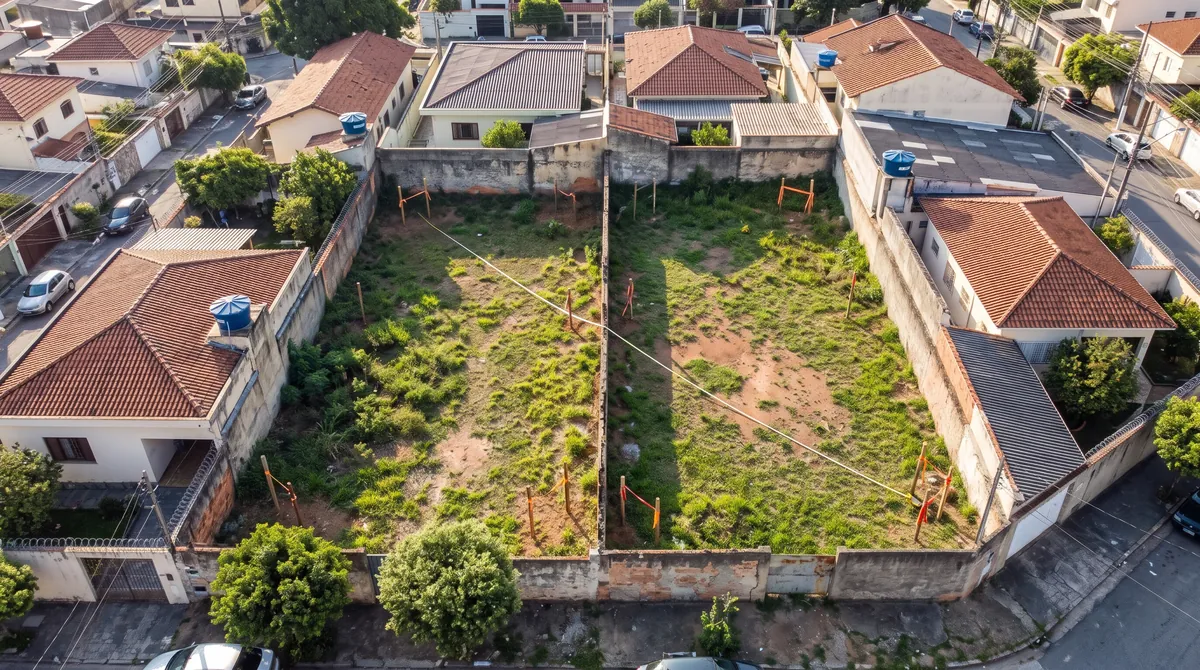
Lot unification is the common name for the lot merger (remembramento): joining neighboring lots to form a single one, without opening or changing streets. São Paulo's Zoning Law (Law No. 16.402/2016) treats the lot merger as the regrouping of lots for building.
When it pays off
Unification is the route for someone who wants to use neighboring lots as a single lot, for example to build over the whole area. Before starting, it is worth checking two things: whether the combined area fits within the limits of the zone and whether the lots are in the name of the same owner.

Registry office (cartório) or City Hall
Under Decree No. 57.558/2016, if the resulting total area is up to 20,000 m², no City Hall permit is needed: the unification is done at the Real Estate Registry Office (Cartório de Registro de Imóveis). Above that, the lot merger permit is requested from the Municipal Department of Urbanism and Licensing (Secretaria Municipal de Urbanismo e Licenciamento, SMUL), through Aprova Digital, and is valid for 1 year, the period within which the registration at the registry office must be made.
At the registry office, the unification appears as a merger of the property records (matrículas). The Public Records Law allows neighboring properties that belong to the same owner to be merged. For that reason, lots with different owners cannot be merged until the ownership is in the same name.
The limits of each zone
The resulting lot cannot exceed the maximum frontage and area of the zone, set out in Table 2A of the Zoning Law: 150 m of frontage and 20,000 m² in most zones, and 100 m and 10,000 m² in ZER, ZCOR and ZPR. The law also prohibits joining lots in an Exclusively Residential Zone (ZER) with lots in other zones.
How large the lot can grow, by zone
| Zone | Maximum frontage | Maximum area |
|---|---|---|
| ZEU, ZEM, ZC, ZM and ZEIS | 150 m | 20,000 m² |
| ZER, ZCOR and ZPR | 100 m | 10,000 m² |
| ZDE-1 | 20 m | 1,000 m² |
After the unification, the IPTU also needs to be adjusted. The Municipal Finance Department (Secretaria Municipal da Fazenda) combines the registrations through the DIC-D Englobamento service, requested after the lots have been unified.
What this changes for you
- Add up the area of the lots: up to 20,000 m², the route is the registry office.
- Check that the lots are in the name of the same owner and which zone each one is in on GeoSampa.
- After the registry office, request the englobamento on the IPTU so that the registration matches the property record.
Want to know how this applies to your property or business? MTC reviews it before any proposal.
Chat on WhatsAppSources
- Municipal Legislation Catalog (Catálogo de Legislação Municipal): Decree No. 57.558/2016 (land subdivision)(opens in a new tab)
- Zoning Law, Law No. 16.402/2016 (Table 2A and Art. 17)(opens in a new tab)
- Public Records Law, Law No. 6.015/1973 (merger of property records)(opens in a new tab)
- São Paulo City Hall (SMUL): lot merger permit(opens in a new tab)
- São Paulo City Hall (Finance): change of lot in the IPTU (DIC-D)(opens in a new tab)
Informational text, based on official acts and publications. The ads on this page are for MTC's own services. To find out how this applies to your property or business, talk to the MTC technical team.