
Lots and urban planning · City Hall and registry office
Lot merger (remembramento) or lot unification
Merging two or more neighboring lots into one, with documentation, a project and follow-up at City Hall and at the registry office.
Quick answer
Lot merger (remembramento) in São Paulo, in a few lines
A lot merger (remembramento), also called lot unification, is the joining of neighboring lots to form a single one. In São Paulo, if the total area is up to 20,000 m², no City Hall permit is needed and the unification is done at the registry office, with lots belonging to the same owner. Above that, the permit is requested from SMUL. ZER (strictly residential zone) lots cannot be joined with lots in other zones.
Updated on by the MTC technical team, based on the rules cited on this page.
- No permit
- Resulting total area up to 20,000 m² Source: Decree No. 57.558/2016 (land subdivision)(opens in a new tab)
- Maximum lot area
- 20,000 m² and 150 m of frontage (smaller in some zones) Source: Zoning Law, Law No. 16.402/2016 (Table 2A)(opens in a new tab)
- At the registry office
- Merging the property records of lots with the same owner Source: Public Records Law, Law No. 6.015/1973(opens in a new tab)
- On the IPTU
- DIC-D Englobamento service Source: São Paulo City Hall (Finance Department): lot change on the IPTU (DIC-D)(opens in a new tab)
What a lot merger is
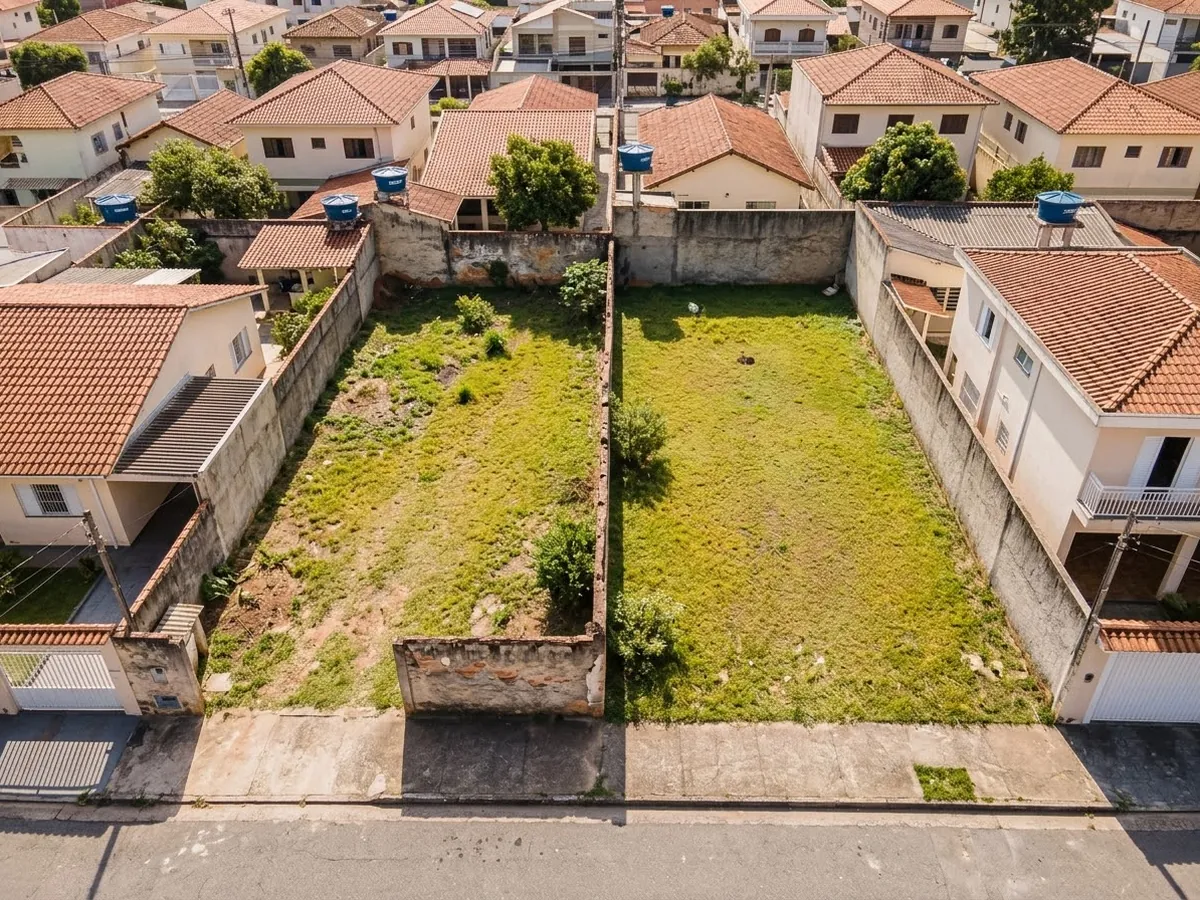
A lot merger (remembramento), or unification, is joining two or more neighboring lots into a single lot, with one property record and one IPTU registration.
It is common when the owner buys the neighboring lot to expand the house, the shop or the warehouse. Sometimes the construction has already crossed the boundary, and the work cannot be regularized while the lots remain separate.
MTC checks the property records, the owners and the encumbrances on each lot, prepares the unification design and follows the application at City Hall and at the registry office.
What MTC does
Document review
We check the property records, owners and encumbrances on each lot.
Survey
Measurement and adjoining boundaries of the new lot.
Unification design
Technical documents for City Hall.
New property record
Follow-up at the registry office until recording.
Understand it in one image
How two lots become one
- 1The lots must be next to each other and have the same owner.
- 2Up to 20,000 m² in total, the merger is done directly at the registry office, with no permit.
- 3Above that, the permit is requested from the Urban Planning and Licensing Secretariat.
- 4A lot in a ZER zone cannot be merged with a lot in another zone.
What needs to be in order to unify
If one of them is pending, the unification is held up.- 01 · AdjacencyLots sharing a common boundary
- 02 · OwnersSame owner or an agreement between them
- 03 · EncumbrancesMortgages and seizures reviewed
- 04 · Property recordsUp-to-date records for each lot
How large lots can grow, by zone
Merging lots has a limit: the resulting lot cannot exceed the maximum frontage and area for the zone. The figures come from Table 2A of the Zoning Law.
| Zone | Maximum frontage | Maximum area |
|---|---|---|
| ZEU, ZEM, ZC, ZM and ZEIS | Maximum frontage:150 m | Maximum area:20,000 m² |
| ZER, ZCOR and ZPR | Maximum frontage:100 m | Maximum area:10,000 m² |
| ZDE-1 | Maximum frontage:20 m | Maximum area:1,000 m² |
It is prohibited to merge ZER lots with lots in other zones (art. 17 of Law 16.402/2016). Lots above the maximum are allowed only for the uses listed in art. 42.
Source: Zoning Law, Law No. 16.402/2016 (Table 2A)(opens in a new tab)Why do a lot merger
From several separate lots to a single lot
Each card shows a common problem. Tap a problem to see how it is solved.
What happens without a lot merger
Without the merger, every new step runs into the division between the lots. The problems pile up as the property grows. With the documents for the lots in order, the merger can still be requested.
- 1
Separate neighboring lots
The owner uses the lots as one, but the documents are separate.
What can be doneCheck the property records, owners and encumbrances of each lot.
- 2
Building across the lot line
The building extends from one lot into the other.
What can be donePrepare the merger plan before regularizing the building.
- 3
Project or Habite-se denied
City Hall does not approve construction across separate lots.
What can be doneApprove the merger first and then the building.
- 4
Sale or estate inventory blocked
The registry office requires the situation of each lot to be resolved.
What can be doneRegister the merged property record and record the building on it.
While the lots remain separate on the property record
When selling or financing
- Slow negotiationEach lot has to be reviewed.
- Limited collateralThe bank appraises the lots separately.
In using the property
- Expansion blockedConstruction across lots is not approved.
- Multiple IPTU billsMore registrations to manage.
In the family's assets
- Confusing estate inventorySeparate lots for a single property.
- Loss of valueA fragmented area is worth less.
Bought the neighboring lot? See how to merge them.
Chat on WhatsAppWhat a lot merger does for the property
Viable project
Construction approval across the whole area.
Single set of documents
One property record and one municipal registration.
Building potential
A larger lot may allow more built area.
Added value
A single area is usually worth more.
Habite-se possible
Buildings that occupy both lots can be regularized.
Simple management
One IPTU bill and one set of documents.
When it is needed
- Construction project on more than one lot
- Existing building across the lot line
- Purchase of a neighboring lot
- Preparing to sell
- Requirement from City Hall or the registry office (cartório)
Documents that help you get started
You do not need all of them. The team will tell you what is missing.
- Property records for all the lots
- IPTU for each lot
- Owners' documents
- Existing plan or survey
- Building plans, if any
How we handle your case
- 1
Analysis
Property records, owners and encumbrances.
- 2
Survey
Measurement and boundaries.
- 3
Project
Technical drawings and ART.
- 4
Approval
Filing at City Hall.
Registration
Opening of the merged property record.
- The lots must belong to the same owner or to owners who agree on the merger.
- Encumbrances such as a mortgage or a seizure must be reviewed.
- There are City Hall and registry office costs.
Questions about lot mergers (remembramento) or lot unification
The questions that come to the team and show up in searches most often, with the answer and the source.
See all questionsThrough the lot merger (remembramento), the regrouping of lots for building, within the maximum measurements of the zone. If the total area is up to 20,000 m², the unification is done directly at the registry office, without a City Hall permit.
Source: Decree No. 57.558/2016 (land subdivision) (opens in a new tab)Yes. Remembramento is the name the law gives to lot unification: the regrouping of neighboring lots for building, without changing the streets. At the registry office, it appears as the merger or unification of the property records.
Source: Zoning Law, Law No. 16.402/2016 (Table 2A) (opens in a new tab)To merge the property records, yes. The public records law allows the merger of neighboring properties that belong to the same owner.
Source: Public Records Law, Law No. 6.015/1973 (opens in a new tab)20,000 m², with 150 m of frontage, and smaller limits in some zones, such as ZER, ZCOR and ZPR, with 10,000 m² and 100 m.
Source: Zoning Law, Law No. 16.402/2016 (Table 2A) (opens in a new tab)No. The Zoning Law prohibits the merger of ZER lots with lots in other zones.
Source: Zoning Law, Law No. 16.402/2016 (Table 2A) (opens in a new tab)When the resulting total area exceeds 20,000 m². The application is made through Aprova Digital, at the Department of Urbanism and Licensing (Secretaria de Urbanismo e Licenciamento).
Source: São Paulo City Hall (SMUL): lot merger permit (opens in a new tab)The IPTU unification is requested from the Finance Department (Secretaria da Fazenda), through the DIC-D Englobamento service, after the lots are unified.
Source: São Paulo City Hall (Finance): change of lot in the IPTU (DIC-D) (opens in a new tab)No. Re-parceling is regrouping lots and then dividing them into new lots. A lot merger only joins them.
Source: Zoning Law, Law No. 16.402/2016 (Table 2A) (opens in a new tab)Yes. It is valid for 1 year, and the registration at the registry office must be done within that period.
Source: Decree No. 57.558/2016 (land subdivision) (opens in a new tab)Legal basis and sources
- Zoning Law, Law No. 16.402/2016 (Table 2A)(opens in a new tab)
- Decree No. 57.558/2016 (land subdivision)(opens in a new tab)
- São Paulo City Hall (SMUL): lot merger permit(opens in a new tab)
- Public Records Law, Law No. 6.015/1973(opens in a new tab)
Informational content, reviewed on October 23, 2026. The rules may change; the analysis of each case considers the rule in force on the date of the application. MTC is a private company, with no affiliation with public agencies.
Related services
- Lot splitDivision of a lot into two or more areas, with a project, City Hall approval and the opening of the new property records.See service
- Registry office casesRecordings on the property record (averbações), registrations, property records (matrículas), deeds, and corrections at property registry offices (cartórios).See service
- Habite-se and Certificate of CompletionDocumentation and follow-up of the Certificate of Completion at City Hall, the basis for recording the construction at the registry office (cartório).See service