
Municipal Law No. 17.202/2019
Amnesty (Anistia) and property regularization in São Paulo
See whether your building may fall under the regularization rules currently in force.
What the Amnesty (Anistia) is
Municipal Law No. 17.202/2019, known as the Amnesty Law, makes it possible to regularize buildings in the city of São Paulo that were built or expanded in violation of the building rules and the land use and occupation rules.
It applies to buildings completed by July 31, 2014. The law considers an area completed if, on that date, its walls were already up and its roof was in place.
In practice, the Amnesty accepts constructions that would hardly be approved under the standard rules, as long as the building offers conditions of hygiene, safe use, accessibility, stability, habitability and salubrity. Some situations fall outside the law, such as construction on public land or in a non-buildable strip along streams and reservoirs.
The procedure depends on the size, use and situation of the property. MTC carries out the eligibility analysis, prepares the technical documentation with a qualified technical manager and follows the request until City Hall decides.
Situations that call for a technical assessment
- Construction without an approved project or without a Habite-sePopular name for the Certificate of Completion: a City Hall document confirming that the construction work was finished according to the approved plans. (certificate of occupancy)
- Expansion not recorded on the property record
- Approved plan that differs from the construction as built
- Change of use or new purpose for the property
- Outstanding safety issues in the building
- Property not regularized at the registry office
The regularization procedures provided for in the law
The eligibility analysis shows which one applies to your property.- 01 · ProcedureAutomaticLower- and middle-standard homes that were fully exempt from IPTU (property tax) in 2014. City Hall treats them as regular, with no request needed.
- 02 · ProcedureDeclaratoryBuildings with up to 1,500 m² of built area, in the cases provided for by law, with an electronic request and documentation signed by a professional.
- 03 · ProcedureStandardBuildings that do not fit the previous ones, such as those above 1,500 m², with a full technical review by City Hall.
Why join the Amnesty
From a property outside the law to one regularized by the Amnesty
Each card shows a common problem. Tap a problem to see how it is solved.
What happens if the property remains irregular
The Amnesty has a deadline. After it, the property goes back to the standard rules, which are more demanding. There is still a path at each stage, but it gets longer.
- 1
Amnesty deadline still running
The property can be regularized under the most flexible rules of the law.
What can be doneCarry out the eligibility analysis and gather the documents to file within the deadline.
- 2
Deadline closed
Without a filing, the property goes back to the standard approval rules.
What can be doneAssess approving a project or adapting the construction to the rules in force.
- 3
Enforcement and fines
City Hall identifies the irregularity and issues violation notices that may be repeated.
What can be doneRespond to the notification and file the regularization through the path available.
- 4
Adaptation or demolition
Areas that do not meet the standard rules may require adaptation work or demolition.
What can be doneLook for a technical alternative with an adaptation project and professional support.
Outside City Hall, the problem shows up here
When selling or financing
- Sale blockedThe registry office and the bank do not accept a deed for an area that is not registered.
- Financing deniedThe bank values only the area recorded on the property record. The rest is left out of the loan.
In using the property
- License deniedCompanies located at the property cannot get an operating license.
- Insurance coverage questionedThe insurer may dispute a claim for an area that is not in the documents.
In the family's assets
- Loss of valueAn irregular property sells at a discount and attracts fewer buyers.
- Complicated probateHeirs receive only what is on the property record (matrícula). The built area is left out.
The filing must be made within the Amnesty deadline.
Chat on WhatsAppWhat the Amnesty brings to the property
Pick a benefit to see what it means in practice and where it shows up.
City Hall comes to recognize the construction as it exists today, including expansions and alterations made over the years. It is the starting point for all the other benefits.
São Paulo City HallLaw No. 17.202/2019
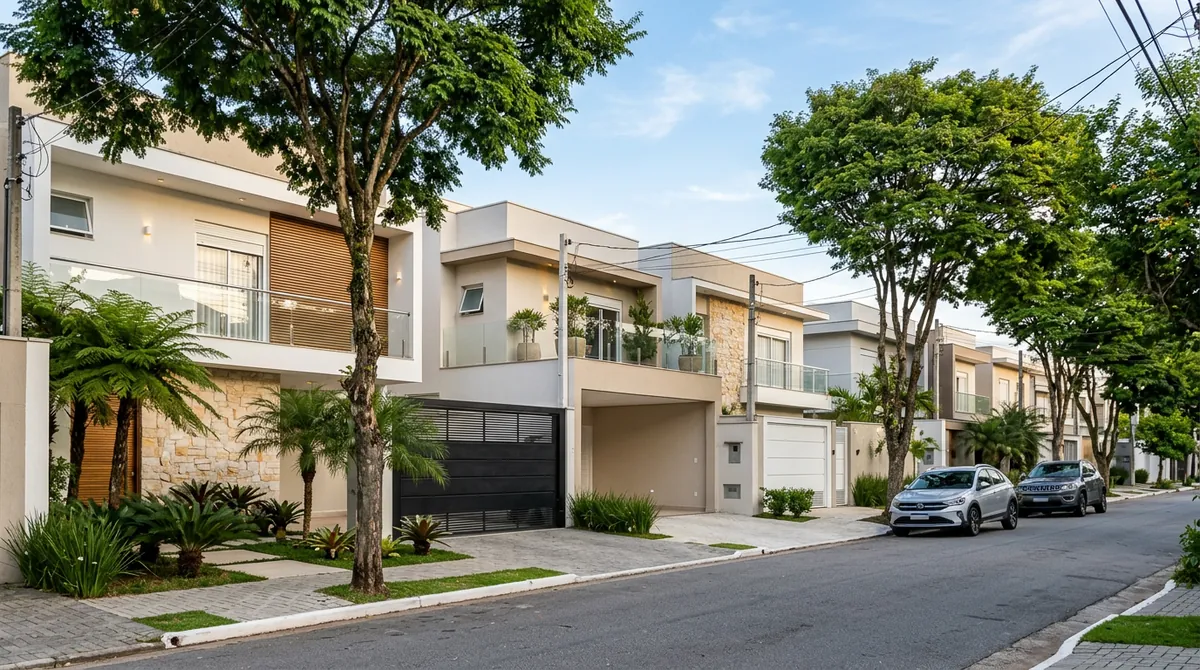
Compliant property
City Hall comes to recognize the construction as it exists today, including expansions and alterations made over the years. It is the starting point for all the other benefits.


Service steps
To get started: updated property record (matrícula), IPTU (property tax), existing plans (if any) and photos of the property.
- 1
You send the information
Address or neighborhood, initial documents and photos of the property.
- 2
Classification analysis
MTC checks which procedure under the law may apply.
- 3
Proposal
Required documentation, steps and terms, in writing.
- 4
Projects and technical reports
Technical documents with technical responsibility taken by a qualified professional.
Filing and follow-up
Filing with the relevant authorities and follow-up until a decision is made.
Notice: eligibility depends on the characteristics of the property, the legislation and the review by the relevant authorities. Hiring the service does not guarantee approval.
Questions about the Amnesty
Owners, people in possession of the property, building managers (síndicos) and those responsible for buildings in São Paulo. Each case is assessed according to the characteristics of the property.
The law provides for three procedures: automatic, declaratory and standard. The type of property, its use and the built area determine which one applies, and the initial analysis points the way.
Updated property record (matrícula), IPTU (property tax), previous plans (if any), current photos and information about the changes made.
No. Approval depends on the review by the relevant authorities. MTC provides the analysis, guidance, technical documentation and follow-up.
Check your propertyCheck your property, townhouse, shop, warehouse
Send the address or neighborhood and a short description. MTC will guide you on the eligibility analysis.