
Regularization · City Hall and registry office
Property regularization
Technical analysis, project design, and follow-up so that the property is consistent with City Hall and with the property record at the registry office.
Quick answer
Property regularization in São Paulo at a glance
Construction or an expansion done without a City Hall permit is regularized with the Regularization Certificate (Certificado de Regularização), provided for in the Building Code (Law 16.642/2017), when the work complies with the law. If it does not comply and was completed by July 31, 2014, the path may be the Amnesty (Anistia, Law 17.202/2019), with applications until November 30, 2026. Afterwards, the construction is recorded on the property record (matrícula) at the registry office (cartório).
Updated on by the MTC technical team, based on the rules cited on this page.
- City Hall document
- Regularization Certificate, equivalent to the Habite-se Source: São Paulo City Hall (SMUL): irregular building and Regularization Certificate(opens in a new tab)
- Tolerance
- Deviation of up to 5% from the law Source: Building Code (Código de Obras e Edificações), Law No. 16.642/2017(opens in a new tab)
- Decision deadline
- Up to 90 days for City Hall to decide on the application Source: Building Code (Código de Obras e Edificações), Law No. 16.642/2017(opens in a new tab)
- Amnesty
- Work completed by July 31, 2014, applications until November 30, 2026 Source: Decree No. 65.481/2026 (Amnesty deadline until November 30, 2026)(opens in a new tab)
What property regularization is
Regularizing a property means making what exists on the land match what is approved by City Hall and recorded at the registry office.
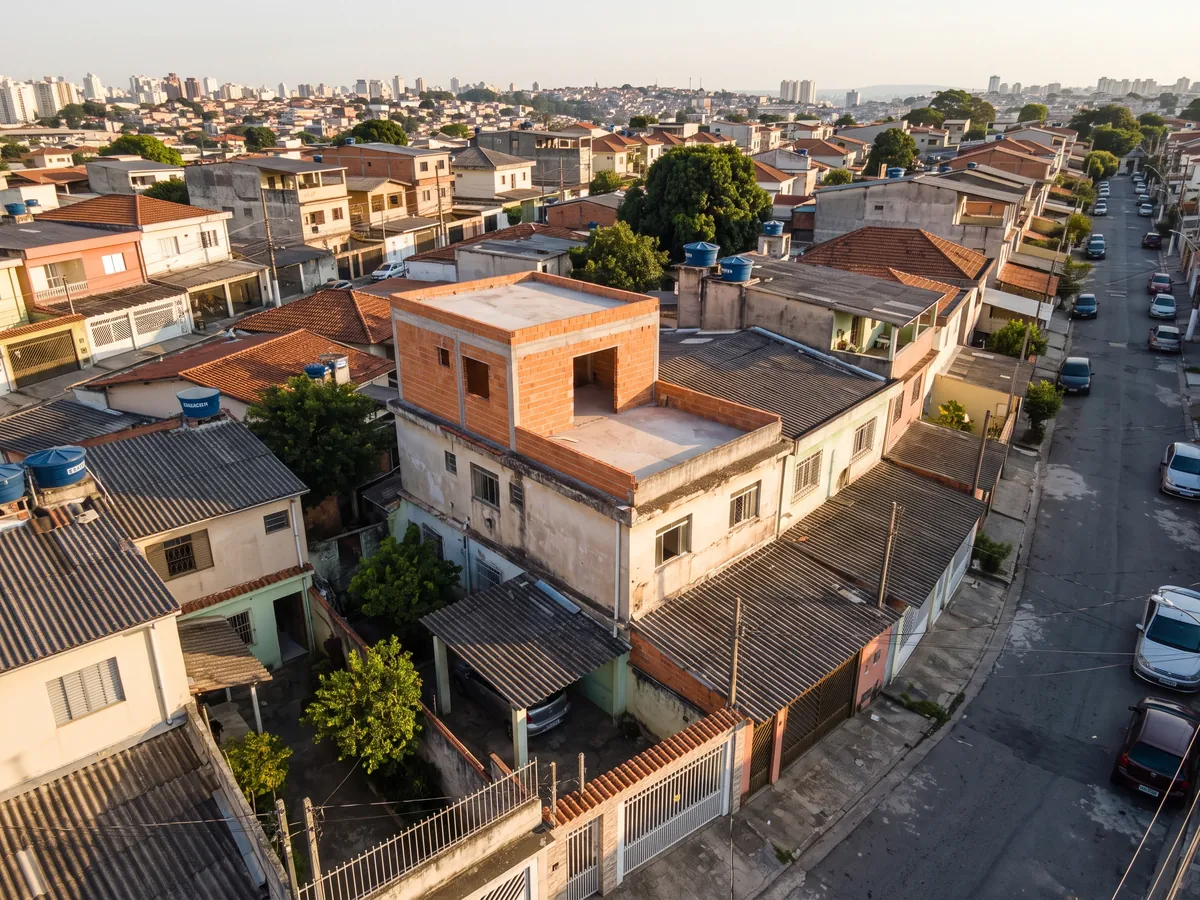
The difference usually appears over time: an extra room, a backyard annex, a second floor, an enclosed garage, a shop on the ground floor of a house. Often the owner only finds out when trying to sell, get financing or open a business, or when a notice arrives.
The path depends on the case: project approval, Amnesty, Certificate of Completion (Habite-sePopular name for the Certificate of Completion: a City Hall document confirming that the construction work was finished according to the approved plans.) and recording on the property record. MTC reviews the property, indicates the procedure and follows each step through to the final document.
What MTC does
Property assessment
We compare the actual construction with the approved plan, the property record and the IPTU.
Survey and design
Measurement, technical drawings and the documents required by City Hall.
Technical responsibility
Qualified professional with an ARTTechnical Responsibility Record (Anotação de Responsabilidade Técnica). A CREA record that identifies the engineer responsible for a project, technical report, or construction work. or RRTRRT (Technical Responsibility Record). The equivalent of the ART for architects, registered with the CAU. on every document.
Complete follow-up
Filing, answers to requirements, Habite-sePopular name for the Certificate of Completion: a City Hall document confirming that the construction work was finished according to the approved plans. and recording.
Understand it in one image
Which path fits your work
- No1Was the work done with a Construction Permit (Alvará de Execução)?YesCertificate of Completion (the former habite-se)
- No2Without a permit, does it comply with the law, within a 5% difference?YesCertificate of Regularization
- No3Does it not comply with the law, but was it completed by July 31, 2014?YesSP Amnesty, with applications until November 30, 2026
A regular property is one where the four records say the same thing
If one of them differs, there is an irregularity.- 01 · On the landThe construction that exists today
- 02 · At City HallApproved project and Habite-se
- 03 · At the registry officeProperty record with the area recorded
- 04 · In the IPTUTax registration with the correct area
What it costs to leave the work unregularized
The Building Code defines what happens when City Hall finds work without a permit or a building without a certificate. That is what regularization avoids.
| Situation | What the Building Code provides |
|---|---|
| Work without a permit | Fine, stop-work order (embargo) and summons, issued at the same time (art. 83) |
| Building completed without a certificate | Summons to apply for the document within 5 days; fine reapplied every 90 days, for up to 1 year (art. 93) |
| Technical manager | Liable for 80% of the fine (art. 97) |
| Repeat offense | 20% increase each time, up to 2 times the initial fine (art. 98) |
| Defense | 15-day deadline to submit a defense (art. 96) |
Low-cost housing and places of worship get the fine reduced by 90% (art. 99).
Source: Building Code (Código de Obras e Edificações), Law No. 16.642/2017(opens in a new tab)Why regularize the property
From irregular property to regularized property
Each card shows a common problem. Tap a problem to see how it is solved.
What happens to an irregular property
At City Hall, the situation usually gets worse over time. Even after a notice or a fine, regularization can still be requested, and the sooner it starts, the simpler it is.
- 1
Notification
City Hall identifies the irregularity and sets a deadline for a response.
What can be doneRespond within the deadline with the regularization application or a technical defense. It is the simplest moment to resolve the issue.
- 2
Fine
Without a response within the deadline, a violation notice follows, and it may be repeated as long as the irregularity continues.
What can be doneFile an appeal where applicable and file the regularization application to stop further violation notices.
- 3
Stop-work or closure order
The work is stopped or the use of the property is restricted until the situation is resolved.
What can be doneMake whatever adjustments are required and prove the regularization in order to request release.
- 4
Demolition
In serious cases, when the construction cannot be regularized, demolition may be ordered.
What can be doneAssess whether there is a technical or legal alternative, such as partial adjustment or eligibility for the Amnesty.
Beyond City Hall: where an irregular property gets stuck
When selling or financing
- Sale blockedThe registry office and the bank do not accept a deed for an area that is not registered.
- Financing deniedThe bank values only the area recorded on the property record. The rest is left out of the loan.
In using the property
- License deniedCompanies located at the property cannot get an operating license.
- Insurance coverage questionedThe insurer may dispute a claim for an area that is not in the documents.
In the family's assets
- Loss of valueAn irregular property sells at a discount and attracts fewer buyers.
- Complicated probateHeirs receive only what is on the property record (matrícula). The built area is left out.
The sooner regularization starts, the fewer the steps and costs.
Chat on WhatsAppWhat regularization brings to the property
Added value
A property with up-to-date documentation is worth more and sells faster.
Access to credit
It can be financed, refinanced or used as collateral.
Legal certainty
What exists becomes recognized by City Hall and the registry office.
No more fines
Regularization ends the source of the violation notices on the construction.
Commercial use cleared
Opens the way for the operating license and the AVCB.
Inheritance without surprises
Probate and division of the estate proceed with the property's real area.
When it is needed
- Expansion, new floor or annex without approval
- Difference between the construction, the plan and the property record
- Notice, summons or fine from City Hall
- Sale, financing or probate
- Change of use to a shop or services
Documents that help you get started
You do not need all of them. The team will tell you what is missing.
- Updated property record
- IPTU bill or statement
- Approved plan, if any
- Current photos of the construction
- Notice or fine received, if any
How we handle your case
- 1
Initial analysis
Documents, situation at City Hall and possible path.
- 2
Survey
Measurement of the existing construction on site.
- 3
Design and ART
Technical documents signed by a qualified professional.
- 4
Filing
Application at City Hall and answers to requirements.
Habite-se and recording
Certificate of Completion and entry on the property record.
- Not every construction can be regularized. The initial analysis says whether there is a path.
- Fees and compensation payments may be charged by public agencies.
- The timeline depends on City Hall and the complexity of the case.
Questions about Property regularization
The questions that come to the team and show up in searches most often, with the answer and the source.
See all questionsBy applying for the Regularization Certificate, provided for work done without a City Hall permit. The work must comply with the law of the time when it was built, adapted to safety and accessibility rules, or with the current law.
Source: Building Code (Código de Obras e Edificações), Law No. 16.642/2017 (opens in a new tab)The Regularization Certificate requires the work to comply with the law, with a tolerance of up to 5%. The Amnesty (Law 17.202/2019) regularizes buildings that do not comply with the law, as long as they were completed by July 31, 2014, with applications until November 30, 2026.
Source: Law No. 17.202/2019 (Amnesty) (opens in a new tab)No. For an irregular building, City Hall only accepts the regularization process or the demolition process. First you regularize, then you apply for the renovation.
Source: São Paulo City Hall (SMUL): irregular building and Certificate of Regularization (opens in a new tab)Property documents, the simplified design of what was built, a topographic survey when necessary and the completion declaration signed by a qualified professional. Elevators and equipment must be registered.
Source: Building Code (Código de Obras e Edificações), Law No. 16.642/2017 (opens in a new tab)Yes. The drawings and the application declaration are signed by a qualified professional, who is technically responsible for what was declared.
Source: Building Code (Código de Obras e Edificações), Law No. 16.642/2017 (opens in a new tab)The Building Code gives City Hall up to 90 days to decide. If there are requirements ("Comunique-se" notice), the deadline to meet them is up to 180 days.
Source: Building Code (Código de Obras e Edificações), Law No. 16.642/2017 (opens in a new tab)It issues a fine, a stop-work order (embargo) and a summons at the same time. The technical manager is liable for 80% of the fine, and repeat offenses increase the amount.
Source: Building Code (Código de Obras e Edificações), Law No. 16.642/2017 (opens in a new tab)Record the construction on the property record (averbação). The Regularization Certificate is equivalent to the Habite-se and is the document the registry office uses for the recording.
Source: São Paulo City Hall (SMUL): irregular building and Certificate of Regularization (opens in a new tab)Legal basis and sources
- Building Code (Código de Obras e Edificações), Law No. 16.642/2017(opens in a new tab)
- Decree No. 57.776/2017, which regulates the Building Code(opens in a new tab)
- Law No. 17.202/2019 (Amnesty)(opens in a new tab)
- Decree No. 65.481/2026 (Amnesty deadline until November 30, 2026)(opens in a new tab)
- Rules of the São Paulo General Inspectorate of Justice (Corregedoria Geral da Justiça) for registry offices, Volume II(opens in a new tab)
Informational content, reviewed on October 22, 2026. The rules may change; the analysis of each case considers the rule in force on the date of the application. MTC is a private company, not affiliated with government agencies.


Related services
- Amnesty and regularization in São PauloEligibility analysis and follow-up of cases tied to Municipal Law No. 17.202/2019 and to the current rules for regularizing buildings.See service
- Habite-se and Certificate of CompletionDocumentation and follow-up of the Certificate of Completion at City Hall, the basis for recording the construction at the registry office (cartório).See service
- Registry office casesRecordings on the property record (averbações), registrations, property records (matrículas), deeds, and corrections at property registry offices (cartórios).See service