
Registry office · City Hall and registry office
Condominium establishment and individual property records
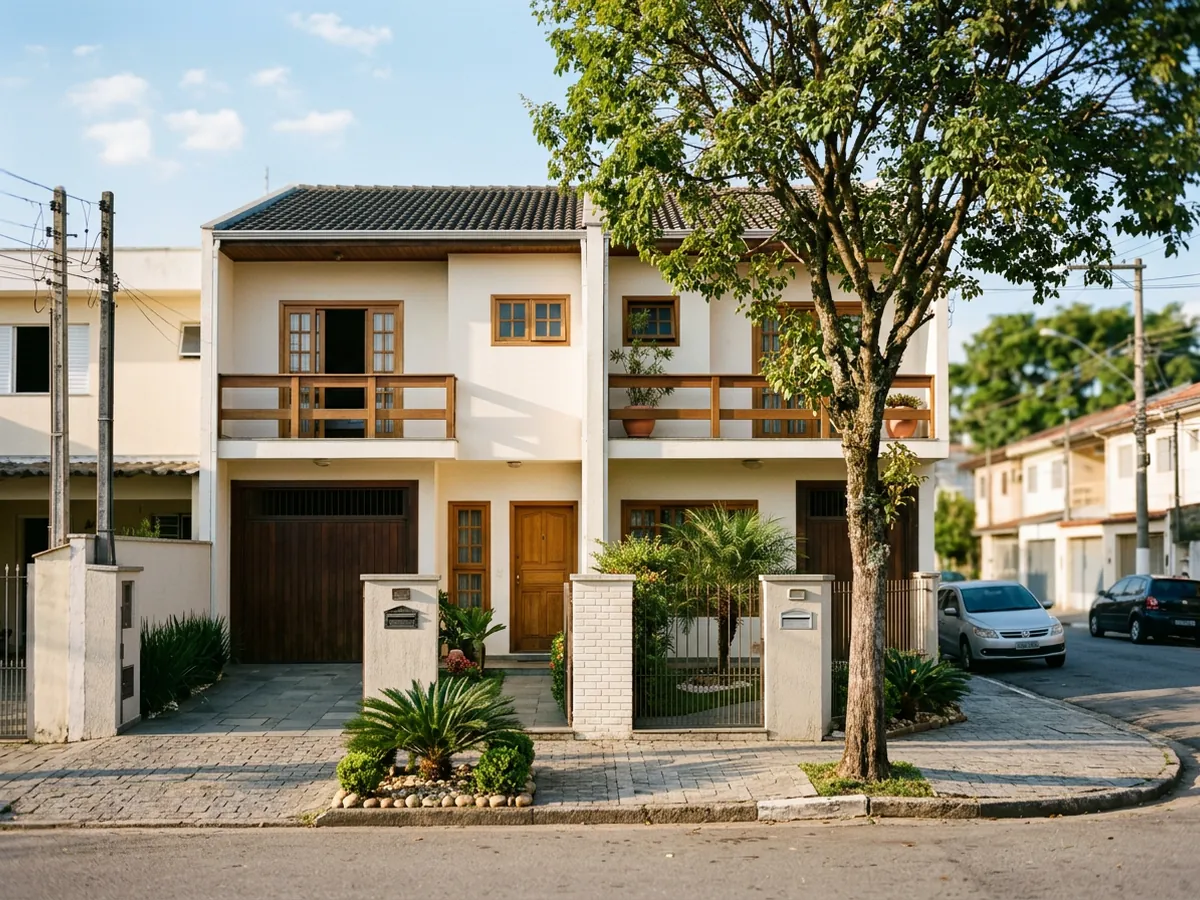
Houses or townhouses on the same lot, each with its own property record: diagnosis, technical documents, City Hall, registry office and separate IPTU, so that each unit can be sold, financed or included in an estate division.
Quick answer
Condominium establishment and individual property records in São Paulo, in a few lines
When a lot has two or more houses and only one property record, the registry office sees a single property. Condominium establishment turns the group into independent units: each house gets its own fractional share of the land and its own property record, and can be sold, financed or included in an estate division separately. For this, all the houses must be regular at City Hall and recorded on the property record. MTC carries out the diagnosis and the technical documents and follows the process at City Hall and the registry office until each house has its own property record.
Updated on by the MTC technical team, based on the rules cited on this page.
- Property record per house
- Only after the condominium establishment is registered Source: Rules of the São Paulo General Inspectorate of Justice (Corregedoria Geral da Justiça) for registry offices, Volume II(opens in a new tab)
- The registry office requires
- Approved design, Habite-se and bylaws Source: Rules of the São Paulo General Inspectorate of Justice (Corregedoria Geral da Justiça) for registry offices, Volume II(opens in a new tab)
- Bylaws
- Signed by 2/3 of the fractional shares Source: Civil Code, arts. 1.331 to 1.334 (building condominiums)(opens in a new tab)
What condominium establishment (instituição de condomínio) is
When a lot has two or more houses, townhouses or apartments and only one property record, the registry office sees a single property. Condominium establishment turns that group into independent units: each house gets its own area, its own fractional share (fração ideal) of the land and, after registration, its own property record.
Without it, none of the houses can be sold, financed or donated safely: a contract without registration does not transfer ownership, a share of the land cannot serve as collateral on its own, and the heirs' probate gets stuck. To establish the condominium, all the houses must be approved and regular at City Hall, with the construction recorded on the property record.
MTC assesses the lot and the houses, indicates whether the path is a condominium or a lot split, regularizes at City Hall when needed, prepares the technical documents with ARTTechnical Responsibility Record (Anotação de Responsabilidade Técnica). A CREA record that identifies the engineer responsible for a project, technical report, or construction work. or RRTRRT (Technical Responsibility Record). The equivalent of the ART for architects, registered with the CAU. and follows the registry office process until the property records are opened and each unit has its own IPTU.
What MTC does
Diagnosis
Property record, City Hall and the houses checked on site.
Regularization
Habite-sePopular name for the Certificate of Completion: a City Hall document confirming that the construction work was finished according to the approved plans. or regularization of the house that lacks it.
Technical documents
Table of areas, fractional shares and descriptive report, with ARTTechnical Responsibility Record (Anotação de Responsabilidade Técnica). A CREA record that identifies the engineer responsible for a project, technical report, or construction work. or RRTRRT (Technical Responsibility Record). The equivalent of the ART for architects, registered with the CAU..
Registry office and IPTU
Registration, a property record for each house and separate IPTU.
Understand it in one image
Two houses, one lot: before and after
- 1Before, the whole lot has one property record, and the houses are a single property.
- 2With all the houses regular at City Hall and the construction recorded, the condominium is established at the registry office.
- 3Each house gets its own property record and its own fractional share of the land.
- 4The shared access becomes condominium area, governed by the bylaws.
For each house to have its own property record
If any of these steps is missing, the registry office returns the application.- 01 · City HallAll houses approved and regular
- 02 · Property recordConstruction recorded
- 03 · Technical documentsAreas and fractional shares of each house
- 04 · BylawsSigned by 2/3 of the shares
Condominium, lot split or lot condominium?
These are three different ways to have separate property records on the same land. The choice depends on the lot, the houses and what they share.
Condominium establishment
Divides the buildings into units; the land stays shared, in fractional shares.
- For houses that share an access, a corridor or open space
- All houses approved and regular at City Hall
- Table of areas, fractional shares and bylaws
- One property record for each unit
Lot split
Divides the land into new lots, each with its own house.
- Each lot with the zone's minimum size and frontage on the street
- Subdivision permit (alvará de desmembramento) from City Hall
- One property record for each lot
- No condominium afterwards
Lot condominium (condomínio de lotes)
Exclusively owned lots with common streets and areas, in new developments.
- Does not depend on finished houses
- License and infrastructure works
- Bylaws and one property record per lot
Houses with their own street frontage and no real common area are often refused as a condominium by the registry office. MTC analyzes the lot first and indicates the path that fits the case.
Source: Civil Code, arts. 1.331 to 1.334 (building condominiums)(opens in a new tab)Why separate the property records
From a lot with tangled ownership to houses with their own documents
Each card shows a common problem. Tap a problem to see how it is solved.
What happens when the houses stay on a single property record
The problem does not show up day to day. It appears at a sale, a financing or an inheritance, and each stage is harder to resolve than the one before.
- 1
Combined IPTU
One tax assessment for all the houses, and one owner's debt shows up for everyone.
What can be doneSeparate the IPTU after the condominium establishment is registered.
- 2
Sale and financing blocked
The house cannot be sold or used as collateral on its own.
What can be doneEstablish the condominium before putting the house on the market.
- 3
Indivisible inheritance
The heirs become owners of shares of the whole lot.
What can be doneDescribe each house and divide the estate with the family's lawyer.
- 4
Forced sale
Without agreement, any owner can ask for the property to be sold and the money divided.
What can be doneSort out the property records while there is still agreement.
Beyond the registry office: what a single property record costs
In the family
- Heirs as co-ownersNobody owns a house of their own.
- Decisions blockedEverything depends on everyone agreeing.
In business
- Wary buyerA share of the land is not the house.
- Risky informal contractAn unregistered contract does not protect you.
In finances
- No creditThe house cannot be used as collateral on its own.
- One owner's debtA seizure on the property record affects the whole lot.
Two houses on the same lot? Talk to MTC before you sell, finance or divide an estate.
Chat on WhatsAppWhat a property record for each house brings
Separate sale
Each house with its own document.
Financing
A unit that can be used as collateral.
Inheritance settled
Estate division with each house described.
Separate IPTU
Each owner pays their own.
Secure transaction
The buyer and the bank get the house's own property record.
Clear rules
Bylaws for expenses and common areas.
When it is needed
- Sale of one of the houses on the lot
- Financing one of the houses or using it as collateral
- Probate or estate division with several houses
- Donating one house to each child
- A single IPTU for all the houses
- Return note from the registry office (nota devolutiva)
Documents that help you get started
You do not need all of them. The team will tell you what is missing.
- Up-to-date property record of the lot
- Habite-se, permits or approved plans, if any
- IPTU bill
- Documents of all the owners
- Photos of the houses and the common areas
- Return note from the registry office, if any
How we handle your case
- 1
Diagnosis
Property record, City Hall and the houses on site.
- 2
City Hall
Habite-se or regularization of all the houses.
- 3
Technical documents
Survey, areas, shares and descriptive report.
- 4
Registry office
Recording, establishment and bylaws.
Property record for each house
Units registered and separate IPTU.
- The lot is not divided: each house gets a fractional share of it.
- A house built without a permit must be regularized first.
- There are registry office costs and, in some cases, taxes.
- Probate and estate division are handled by the family's lawyer; MTC takes care of the technical part.
Questions about condominium establishment and individual property records
The questions that come to the team and show up in searches most often, with the answer and the source.
See all questionsYes, in two ways: establishing a condominium, in which each house becomes a unit with a fractional share of the land, or splitting the lot, if each part meets the zone's minimum lot size. In a condominium, the houses' property records are opened after the construction is recorded and the condominium establishment is registered.
Source: Rules of the São Paulo General Inspectorate of Justice (Corregedoria Geral da Justiça) for registry offices, Volume II (opens in a new tab)A lot split divides the land into lots, and each lot needs the zone's minimum size. Condominium establishment does not divide the land: it divides the buildings into units, and each one gets a fractional share of the land and of the common areas.
Source: Civil Code, arts. 1.331 to 1.334 (building condominiums) (opens in a new tab)Yes. The registry office registers the condominium establishment with the approved design and the Habite-se. In São Paulo, the Certificate of Completion and the Regularization Certificate serve that purpose and are valid for registration, together with the approved plans.
Source: Building Code (Código de Obras e Edificações), Law No. 16.642/2017 (opens in a new tab)First, the construction must be regularized at City Hall: while the building is irregular, the only applications allowed are for regularization or demolition. Once all the houses are regular, the recording and the condominium establishment follow.
Source: São Paulo City Hall (SMUL): irregular building and Certificate of Regularization (opens in a new tab)In a building condominium (condomínio edilício), yes. The bylaws are required to register the establishment, signed by holders of at least 2/3 of the fractional shares, and they set out how expenses are shared, how the condominium is managed and the rules for using the common areas.
Source: Civil Code, arts. 1.331 to 1.334 (building condominiums) (opens in a new tab)The registry office has 10 business days from the filing to register the application or return it with the requirements in writing. The requirements must be met within the priority filing period (prenotação), which lasts 20 business days.
Source: Rules of the São Paulo General Inspectorate of Justice (Corregedoria Geral da Justiça) for registry offices, Volume II (opens in a new tab)Once the establishment is registered, City Hall issues a new tax assessment for each unit, through the condominium split request (desdobro de condomínio). The required document is the property record showing the registration of the establishment.
Source: São Paulo City Hall (Finance): change of lot in the IPTU (DIC-D) (opens in a new tab)A contract without registration does not transfer ownership: the seller remains the owner at the registry office. And the sale of part of the land with a defined location and size is not registered when it is used to get around the condominium or land subdivision rules.
Source: Civil Code, arts. 108 and 1.245 (opens in a new tab)Legal basis and sources
- Civil Code, arts. 1.331 to 1.334 (building condominiums)(opens in a new tab)
- Law No. 4.591/1964 (condominiums in buildings)(opens in a new tab)
- Public Records Law, Law No. 6.015/1973(opens in a new tab)
- Rules of the São Paulo General Inspectorate of Justice (Corregedoria Geral da Justiça) for registry offices, Volume II(opens in a new tab)
- Zoning Law, Law No. 16.402/2016(opens in a new tab)
- Building Code (Código de Obras e Edificações), Law No. 16.642/2017(opens in a new tab)
- São Paulo City Hall (Finance): change of lot in the IPTU (DIC-D)(opens in a new tab)
Informational content, reviewed on November 11, 2026. The rules may change; the analysis of each case considers the rule in force on the date of the application. MTC is a private company, not affiliated with government agencies.
Related services
- Lot splitDivision of a lot into two or more areas, with a project, City Hall approval and the opening of the new property records.See service
- Registry office casesRecordings on the property record (averbações), registrations, property records (matrículas), deeds, and corrections at property registry offices (cartórios).See service
- IPTU area reviewA check of the area, use and construction standard City Hall has on record for the property, with measurement under the IPTU rules and a correction request at the Finance Department, so the IPTU bill matches the real property.See service